Solid Oxide Fuel Cell (SOFC)

Reliable power, 24 hours a day

Solid Oxide Fuel Cell (SOFC) systems that turn fuel into clean electricity on-site, no grid outages, no diesel generators.

Overview

Solid Oxide Fuel Cell (SOFC), in plain terms

SOFC systems convert natural gas, biogas or hydrogen directly into electricity through a clean electrochemical process, no combustion, no moving parts to wear out, and far lower emissions than a traditional generator or grid power from a coal or gas plant. ATE deploys fuel cell systems ranging from 325kW up to multi-megawatt installations, sized to match a single building or an entire industrial site.

Because they run continuously rather than only when the sun shines or the wind blows, SOFC systems are ideal for facilities that can't afford downtime, data centers, hospitals, cold storage and manufacturing plants, giving them a dependable base of clean power around the clock, with industry-leading efficiency of up to 63%.

63%Leading electrical efficiency
ZeroNOx and SOx emissions
ZeroWater used during operation
24/7Continuous clean power
SOFC Benefits

Clean, efficient power, with no compromises

Solid Oxide Fuel Cell technology delivers a level of cleanliness and efficiency that combustion-based generation simply can't match.

Low emissions across the board
No NOx, no SOx
No water used during operation
Overall leading efficiency, up to 63%
No performance degradation under partial load
Runs on NG, biogas, H2 or a blended fuel, 24/7
How It Works

From resource to reliable power

1

Assess your needs

We study your site's power and heat demands to understand what a right-sized system looks like.

2

Design the system

We size a fuel cell installation, from 325kW to multi-MW, to match your load, budget and site constraints.

3

Install on-site

Compact, modular units are installed with minimal disruption and a small physical footprint.

4

Operate & support

Systems run 24/7 with remote monitoring, maintenance and performance support from our team.

Where It's Used

Built for real-world needs

Data centers
Hospitals & healthcare
Cold storage & logistics
Manufacturing plants
Hotels & commercial buildings
Backup & resilience power
Data Centers & AI

Powering hyperscale and AI infrastructure

Thailand's data center market is projected to need more than 5GW of new, reliable power by 2030 as global hyperscalers and cloud operators expand across the region. SOFC systems give data center operators clean, on-site generation that keeps pace with AI-driven demand, without waiting years for new grid or gas-turbine capacity.

Validated for AI workloads and GPU server clusters
Millisecond-scale load following with no performance degradation
100MW+ deliverable within 12 months, years faster than a new CCGT plant
N+1 modular redundancy with hot-swappable units, no single point of failure
Availability designed for 24/7/365 mission-critical operations
Reduces dependence on grid capacity and new transmission build-out

Future-proof: DC-to-DC power for next-gen AI

Next-generation AI data centers are moving toward direct current (DC) power distribution, feeding GPU racks straight from a DC busbar instead of routing through the multiple AC-DC-AC-DC conversion stages of a traditional facility. SOFC systems generate power natively as DC, making them a natural fit for this architecture.

  • Native DC output pairs directly with high-voltage DC busbar architectures, no inverter/rectifier round-trip required
  • Fewer power-conversion stages means less energy lost as heat, and less cooling load on the facility
  • Positions a site for next-generation AI racks as GPU power density continues to climb
  • Can still supply AC loads in parallel, so one system serves both today's infrastructure and tomorrow's
Industrial Estates

Reliable, scalable power for industrial estates

Industrial estates need power that can be added in stages as new tenants and factories come online, without waiting years for grid reinforcement. SOFC systems are built for exactly that.

  • Modular design scales from 325kW to 100MW+, matching an estate's needs as it grows
  • Deployed in as little as 12 months, a 2–4 year head start over new CCGT or grid infrastructure
  • Distributed, on-site generation reduces reliance on estate-wide grid capacity
  • Lower total cost of ownership over the system's operating life, with predictable running costs
Manufacturing

Keeping production lines running

Unplanned downtime is one of the costliest risks a manufacturer faces. SOFC systems deliver continuous, high-quality on-site power that keeps production running, even as demand on the line varies.

No performance loss between 40% and 100% load, matches variable production demand
Runs on natural gas, biogas, hydrogen or a blend as fuel availability evolves
Remote monitoring and predictive maintenance reduce the burden on plant teams
Clean, low-emission power supports ESG goals and export-market compliance
Combined Heat & Power

Capturing waste heat, multiplying efficiency

Paired with combined heat and power (CHP) recovery, SOFC systems capture the heat generated during electricity production, as steam, hot water or chilled water, and put it to work on-site, lifting total system efficiency to around 90%.

Steam recovery for industrial process heat
Hot water recovery for facility and process use
Chilled water recovery to support cooling loads
Total system efficiency raised to circa 90%
Lower operating costs from utilised waste heat
Facility Layout

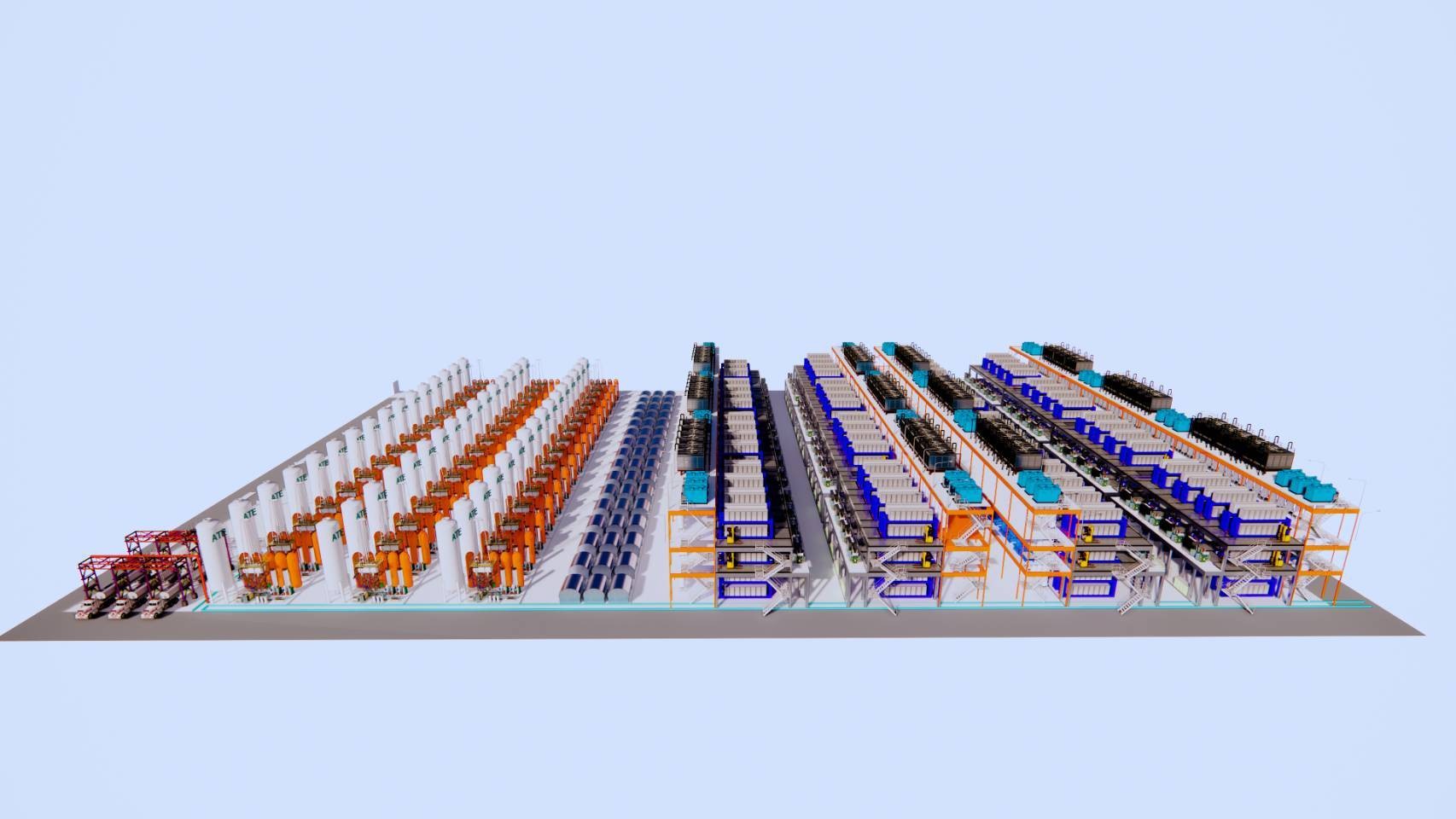
An integrated SOFC, CCUS & CHP plant, at scale

SOFC power generation, carbon capture and combined heat and power recovery working together in a single, integrated facility layout.

SOFC with CHP and CCUS
Rendered layout of an integrated ATE SOFC, CCUS and CHP facility
Carbon Capture & Utilisation

Turning captured CO₂ into energy security

SOFC systems can be paired with carbon capture, utilisation and storage (CCUS) to capture more than 95% of CO₂ emissions at the source, then convert it into valuable, locally produced products, strengthening Thailand's energy security and cutting reliance on imports.

Green Urea, clean fertiliser; Thailand currently imports over 50% of its urea
e-Fuels, sustainable aviation fuel (SAF) and renewable diesel, a market growing ~17% a year through 2050
Carbon-based chemicals for packaging, manufacturing and pharmaceuticals
Calcium carbonate for low-carbon cement and concrete
Why ATE

What makes our approach different

  • Proven fuel cell technology backed by established global partners
  • In-house engineering for design, installation and ongoing support
  • Turnkey energy-as-a-service options, no large upfront capital required
  • Remote monitoring keeps systems running at peak performance
Explore More

Related solutions

Ready to go clean? Let's talk.

Whether you run a business, a factory floor, a data center, or an industrial site, our team can help you find the right clean energy solution, no jargon, just answers.

Get in Touch